
Vapor Degreasing System
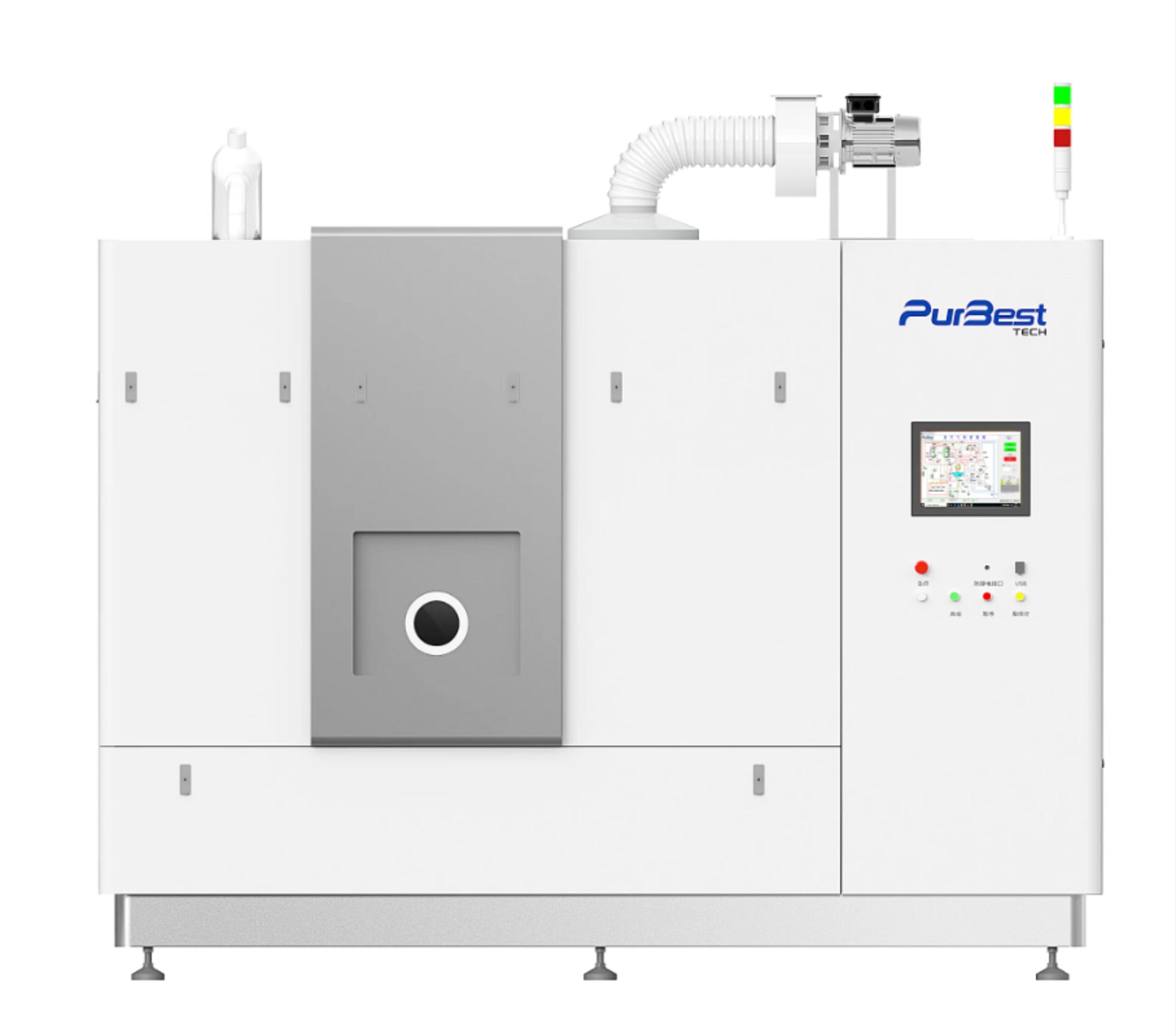
Vapor SUI Precision Vapor Degreasing System
Vapor SUI is a precision vapor degreasing system for removing oils, flux residues, fingerprints, handling contamination, and process soils from high-reliability electronic assemblies, semiconductor packages, RF modules, optics, and precision components.

Vapor SUI — precision vapor degreasing for critical electronics and component cleaning workflows
Process Purpose
Clean Critical Components Without Water Residue or Manual Solvent Variability
Vapor degreasing uses heated solvent vapor that condenses on cooler parts, dissolves contamination, and carries residues away as the condensate drains from the component. For complex geometries, tight gaps, packages, fixtures, and high-value assemblies, this controlled cleaning process can deliver more repeatable results than manual wiping or open-bench solvent cleaning.
Best-Fit Applications
Where Vapor SUI Fits in Electronics Manufacturing
Semiconductor Packages
Supports precision cleaning before inspection, coating, bonding, packaging, or downstream assembly steps where residues can affect reliability or yield.
RF & Microwave Modules
Helps remove contamination that can affect electrical performance, bond quality, solderability, coating adhesion, or long-term module reliability.
Aerospace & Defense Electronics
Supports process-controlled cleaning for high-reliability electronics programs that cannot rely on inconsistent manual cleaning methods.
Common Contamination Targets
- Flux residue and soldering process soils
- Oils, greases, and machining residues
- Fingerprints and handling contamination
- Light particulate and FOD-related contamination
- Pre-coating and pre-inspection cleanliness requirements
- Residues in small gaps, leads, cavities, and package features
Why Engineers Consider Vapor Degreasing
- Fast drying compared with many aqueous cleaning workflows
- Effective cleaning around complex geometries
- Lower risk of trapped water in sensitive assemblies
- Improved repeatability compared with manual IPA wiping
- Useful for high-value, reliability-sensitive components
- Can fit production, lab, prototype, and specialty cleaning cells
Related Cleaning Systems
Build a Cleaning Workflow Around the Actual Contamination Problem
Vapor SUI
Precision vapor degreasing for critical assemblies, components, and packages requiring controlled solvent-based cleaning.

Vapor SUI Mini
Compact vapor degreasing option for smaller parts, lab use, prototype cleaning, and lower-volume specialty workflows.
Vacuum Degreasing
Alternative degreasing architecture for applications that benefit from vacuum-assisted cleaning and drying workflows.
Markets Served
Designed for Reliability-Sensitive Cleaning Requirements
Need to Validate Vapor SUI for Your Cleaning Requirement?
Share the part type, contamination source, material constraints, throughput target, and downstream process. Akrivis can help determine whether Vapor SUI, Vapor SUI Mini, vacuum degreasing, or aqueous cleaning is the better fit.
Equipment suitability depends on material compatibility, chemistry, process parameters, cleanliness requirements, and production constraints.
Application fit
Vapor SUI Precision Vapor Degreasing System: evaluate the process before the model number.
Vapor phase cleaning choices should be checked against solvent/media selection, material compatibility, drying expectations, and cleanliness validation method.
This equipment belongs in the Cleaning & contamination control family. It is typically reviewed for residue, particles, ionic contamination, flux, or process-media control on assemblies and microelectronic hardware.
Typical applications
PCB/SMT assemblies, micro-assembly, SIP/RF/microwave modules, precision parts, stencil/fixture cleaning, and DI-water-supported cleaning processes.
Before quoting, confirm
residue type, cleanliness target, chemistry compatibility, drying requirement, basket/fixture size, throughput, exhaust/utilities, EHS requirements, and validation method.
Akrivis support path
Application review, factory coordination, quote clarification, installation planning, training expectations, documentation follow-up, and service/spares discussion for North American customers.
Buyer note
For high-reliability electronics manufacturing, the useful question is not only whether the machine exists. The useful question is whether the machine family, tooling, process window, utilities, validation approach, and support path fit the actual assembly requirement.
Need to verify fit for Vapor SUI Precision Vapor Degreasing System?
Send the package drawing, process issue, target throughput, cleanliness or lead-geometry requirement, and any acceptance criteria. Akrivis will help identify what should be confirmed before a quote.