
The Problem This Machine Solves
High-mix, low-volume production environments need lead forming flexibility that fully automatic systems can’t provide. When you’re running 50 QFPs of one size in the morning and 200 SOPs of a different size in the afternoon, the changeover time on an automatic forming line kills your throughput. Manual forming with hand tools introduces coplanarity errors — leads bent to different heights that cause solder Opens on fine-pitch packages. The SAPFL bridges this gap: semi-automatic forming with PC-controlled precision and fast changeover between component types.
What the SAPFL Does
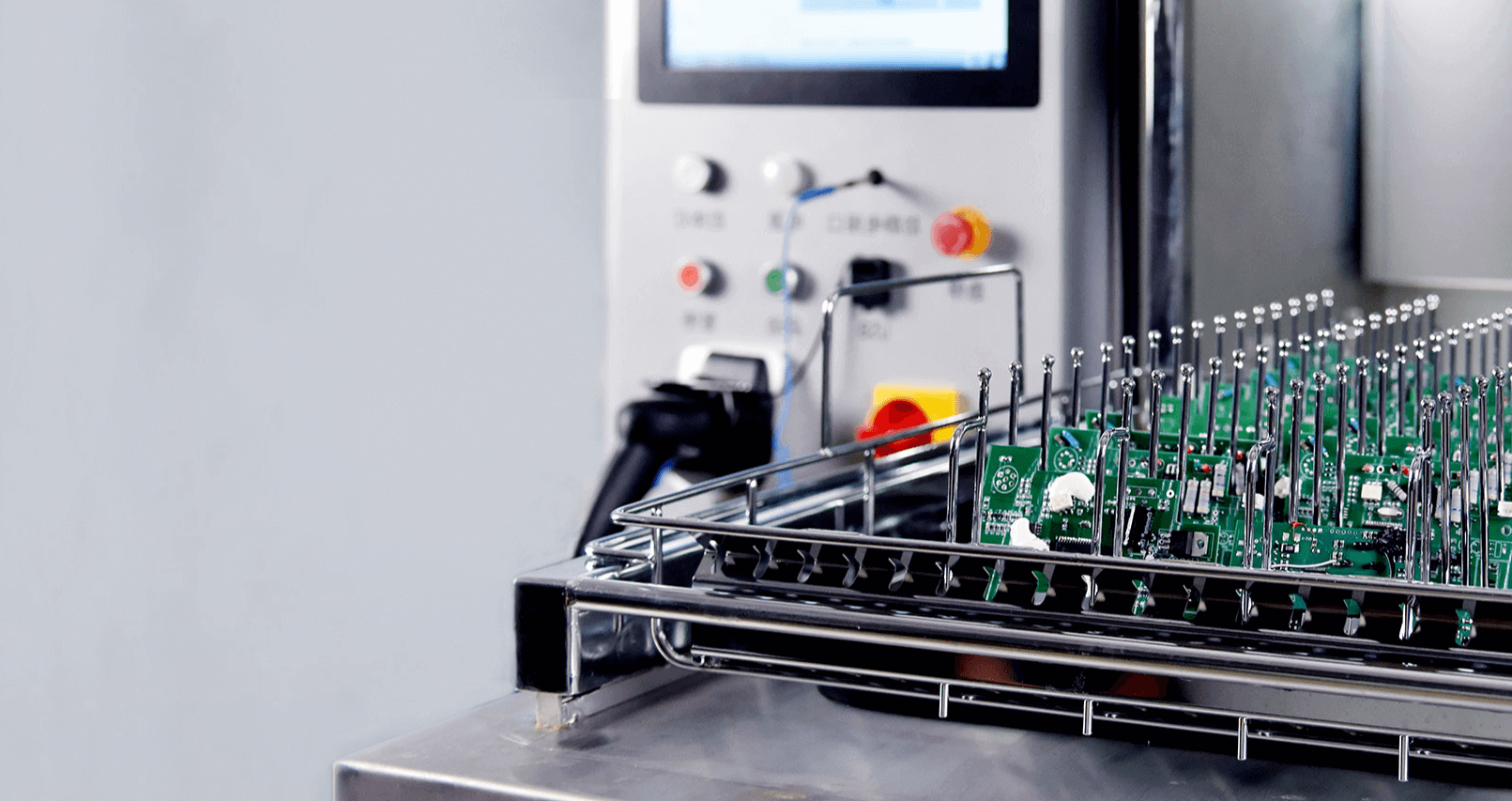
The SAPFL is a semi-automatic lead forming and cutting system for flat-package chips (QFP, SOP, and similar). It performs both forming and cutting in a single operation — the operator places the component, the machine forms the leads to the correct geometry and trims excess lead length. PC control adjusts body width and shoulder height with precision that manual forming can’t match.
Key Specifications
| Forming Type | Semi-automatic — pneumatic press with adjustable two-side mold |
| Control System | PC-controlled with graphical interface — saves multiple data sets |
| Component Handling | Manual placement with vacuum adsorption and center positioning |
| Chip Size Range | 5 × 5 mm to 50 × 50 mm (0.20 × 0.20 in to 1.97 × 1.97 in) |
| Forming Capability | All 2-side and 4-side flat-package chips (top, middle, and bottom lead) |
| Lead Coplanarity | < 0.08 mm (< 0.003 in) after forming |
| Operation | Forming and cutting simultaneously — single operation |
| Mold System | Universal molding holder — converts for different package types |
| Positioning | Center positioning device — precise chip placement |
Control System: Windows OS with touchscreen HMI — programmable recipe storage/recall, cycle data logging, password-protected process parameters, and exportable production records for traceability (IPC-6012, MIL-STD-883, AS9100).
Applications
- QFP forming — gull-wing lead forming on quad flat pack packages with PC-controlled body width and shoulder height
- SOP forming — small outline package lead forming with adjustable mold
- High-mix production — fast changeover between different package types via universal molding holder
- Prototype and low-volume — manual placement with automated forming precision
- Bottom lead chips — forming on bottom-lead packages (center positioning block required)
- Middle lead chips — forming on middle-lead configurations
- Coplanarity-critical applications — lead coplanarity < 0.08 mm for fine-pitch soldering
How It Works
Step 1 — Setup: Operator selects the component type on the PC interface. The system loads saved parameters — body width, shoulder height, forming depth. The universal molding holder is adjusted for the package type (2-side or 4-side).
Step 2 — Component Placement: Operator places the component onto the center positioning device. Vacuum adsorption holds the chip in place. The manual mechanical arm positions the component for forming.
Step 3 — Forming and Cutting: The pneumatic press activates the forming mold. Leads are bent to the programmed geometry while excess lead length is trimmed — both operations happen simultaneously in a single stroke.
Step 4 — Unload: Formed component is removed. Lead coplanarity is verified at < 0.08 mm. The system is ready for the next component — or the operator can switch to a different package type by loading new parameters.
SAPFL vs. Alternatives
| Feature | SAPFL | APFL (Automatic) | PFL-FM (Pneumatic) | Manual Hand Tools |
|---|---|---|---|---|
| Automation | Semi-auto — operator loads, machine forms | Fully automatic | Pneumatic — operator triggered | Manual |
| Changeover | Fast — PC parameter load + mold adjust | Slow — reprogramming | Mold swap required | Instant — but inconsistent |
| Coplanarity | < 0.08 mm | < 0.05 mm | < 0.10 mm | Variable — operator dependent |
| Chip size range | 5–50 mm body | Specific package types | Specific package types | Any — but slow |
| Throughput | Medium | High | Medium | Low |
| Ideal for | High-mix, low-volume | High-volume, single type | Medium-volume, specific type | Prototyping, rework |
What to Send for a Quote
- Package types — QFP, SOP, other flat-pack; body sizes and lead counts
- Lead pitch — 0.4mm, 0.5mm, 0.65mm, 0.8mm, or other
- Forming geometry — gull-wing, J-lead, or other configuration
- Coplanarity requirement — target tolerance if tighter than 0.08 mm
- Volume — components per shift; number of different package types
- Cutting requirement — lead trimming needed before or after forming?
Target Industries
Mixed-product electronics assembly, prototype shops, defense/aerospace (low-volume high-reliability), medical device manufacturing, R&D labs, any facility running high-mix flat-package production.