
The Problem This Machine Solves
Deionized water is the final rinse in every aqueous cleaning process — but buying DI water in drums or from a delivery service creates supply chain dependency, storage problems, and cost that scales with volume. A 250-liter drum of DI water costs $50–$150 depending on purity and location, and you need fresh supply every time the cleaning machine runs out. On-site DI water generation eliminates the supply chain: produce high-purity DI water on demand from municipal tap water, with no delivery schedules, no drum storage, and no quality variability between shipments.
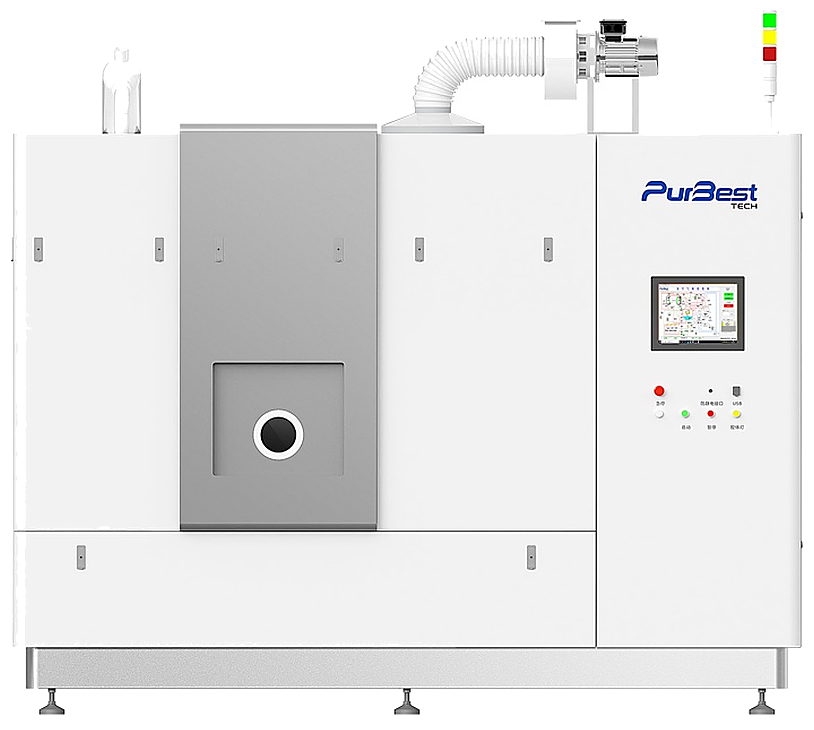
On-Demand DI Water Production
The LDSJ-250L-CS is an advanced RO (Reverse Osmosis) water treatment system that produces deionized water on-site from municipal water supply. It uses a multi-stage purification process — sediment filtration, carbon filtration, RO membrane, and final polishing — to produce DI water at the resistivity levels required for electronics manufacturing cleaning processes.
Key Specifications
| System Type | Reverse Osmosis (RO) water treatment |
| Input | Municipal tap water supply |
| Output | Deionized water — resistivity suitable for electronics cleaning |
| Capacity | 250 liters per cycle (LDSJ-250L-CS designation) |
| Purification Stages | Multi-stage: sediment, carbon, RO membrane, polishing |
| Operation | Automated — fill, purify, store cycle |
| Storage | Integrated DI water storage tank |
Applications
- Final rinse DI water — producing the ultra-pure water needed for the final rinse stage in PCBA and component cleaning
- Hydro-clean machine supply — feeding DI water to Hydro-clean AS, LDS, LTS, and other aqueous cleaning systems
- Vapor phase cleaning support — DI water for co-solvent rinse stages in vapor degreasing operations
- Component rinsing — rinsing sensitive components after chemical processing
- Lab and R&D water supply — high-purity water for laboratory use and process development
- Conformal coating pre-clean — ensuring ionic cleanliness before coating application
Why On-Site DI Water Generation
Cost reduction: On-site DI water costs $0.02–$0.10 per liter to produce (electricity + membrane replacement), versus $0.50–$2.00 per liter for delivered DI water. At 500 liters per day, the payback period is typically 6–12 months.
Supply independence: No delivery schedules, no drum storage, no risk of running out mid-production. The system produces DI water on demand from your existing water supply.
Quality consistency: Delivered DI water quality varies between batches and can degrade during transport and storage. On-site production delivers consistent resistivity every time — the RO membrane and polishing stage produce the same quality water regardless of when it’s made.
How It Works
Stage 1 — Sediment Filtration: Municipal water passes through a sediment filter to remove particulate matter — sand, rust, pipe scale. Protects downstream RO membranes from fouling.
Stage 2 — Carbon Filtration: Activated carbon removes chlorine, chloramines, and organic compounds that can damage RO membranes and contaminate the final DI water.
Stage 3 — Reverse Osmosis: High-pressure pump forces water through RO membranes that reject 95–99% of dissolved salts, minerals, and contaminants. The purified water passes through; the reject stream carries contaminants to drain.
Stage 4 — Polishing: Final ion exchange or mixed-bed resin polishing removes remaining trace ions, bringing resistivity to the levels required for electronics manufacturing — typically >10 MΩ·cm for standard cleaning, >15 MΩ·cm for high-reliability applications.
LDSJ-250L-CS vs. Alternatives
| Feature | LDSJ-250L-CS (On-Site) | Delivered DI Water | Point-of-Use Cartridge |
|---|---|---|---|
| Cost per liter | $0.02–$0.10 | $0.50–$2.00 | $0.10–$0.30 |
| Supply chain | None — on-demand production | Delivery dependent | Cartridge replacement |
| Quality consistency | Consistent — same process every time | Variable between batches | Degrades as cartridge ages |
| Capacity | 250L per cycle — unlimited daily | Limited by drum delivery | Limited by flow rate |
| Storage | Integrated tank | Drum storage required | None |
| Maintenance | Membrane replacement every 1–2 years | None | Frequent cartridge swaps |
What to Send for a Quote
- Water source — municipal tap water quality report if available
- DI water resistivity requirement — >10 MΩ·cm, >15 MΩ·cm, or specific
- Daily volume requirement — liters per day or per shift
- Cleaning machine feed — which Hydro-clean or vapor phase machines will this supply?
- Water pressure — available municipal water pressure
- Drainage — RO reject water drainage available?
Target Industries
Any facility running aqueous PCBA cleaning (Hydro-clean systems), electronics manufacturing with DI water requirements, semiconductor packaging, medical device assembly, laboratory and R&D environments.
Related Equipment
- Hydro-clean AS — automatic PCBA cleaning that uses DI water for final rinse
- Hydro-clean LDS — low stand-off PCBA cleaning with 100% DI water filtration
- Hydro-clean ARRAY — inline continuous cleaning with optional zero-waste DI water recirculation